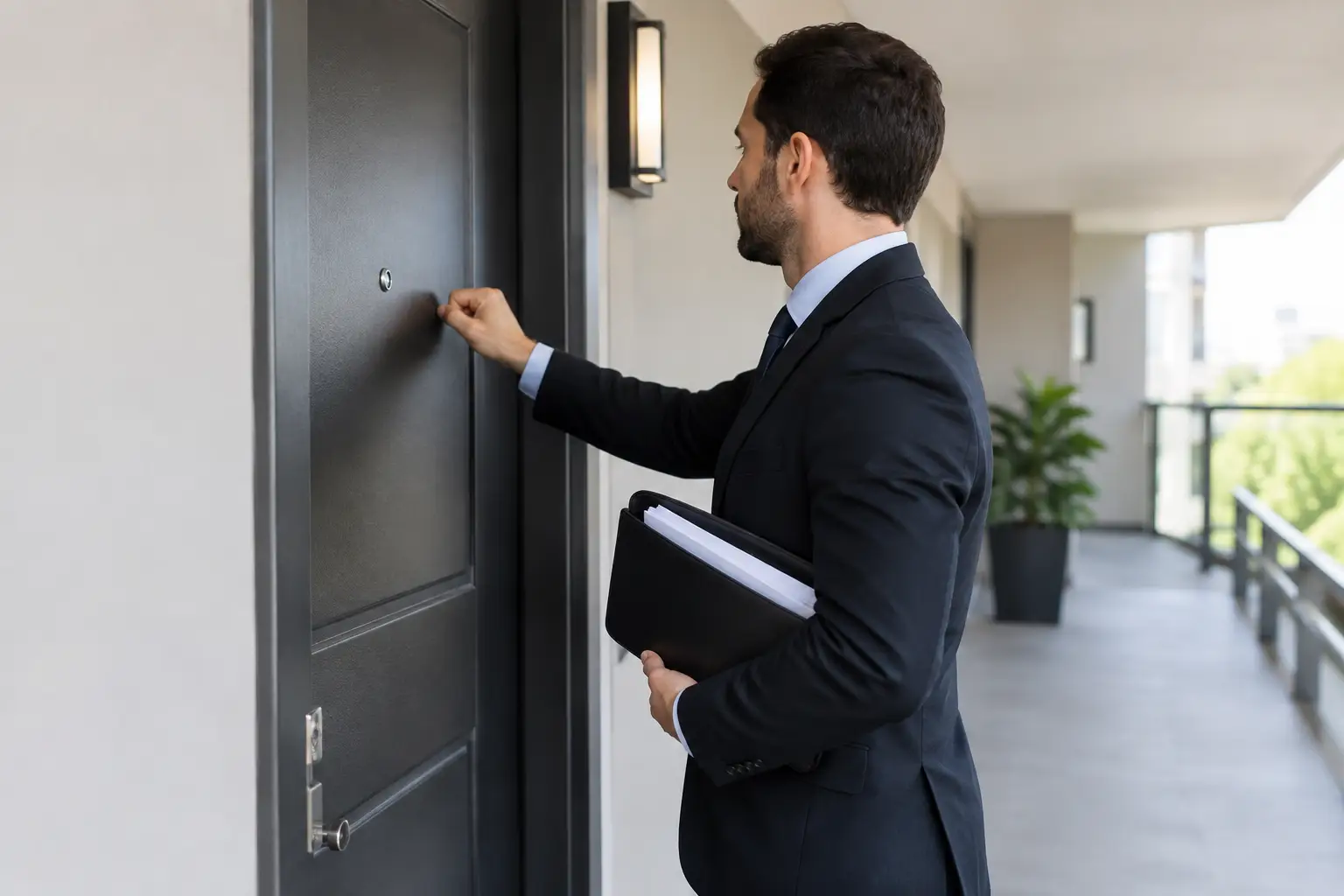
A locked lobby door can turn a routine service assignment into a deadline problem. Can process servers access apartments? Sometimes, but they do not have an automatic right to enter a secured building, bypass a doorman, or force their way into a private residence. Access must be lawful, and the method of service must still comply with the rules that apply to the case.
For attorneys, landlords, property managers, and self-represented parties, the practical question is not simply whether a server can reach an apartment door. It is whether the server can document a legally sound attempt or complete valid service without creating a dispute over access, identification, or the recipient’s residence.
Can Process Servers Access Apartments Without Permission?
Generally, no. A process server has no special authority to enter a locked apartment building, a gated community, or an individual apartment without permission. Process servers are not law enforcement officers. They cannot pick locks, force doors, threaten building staff, or claim authority they do not have to obtain entry.
If a tenant, resident, building employee, concierge, or property owner voluntarily allows the server into a common area, the server may proceed to the unit door and attempt service. That permission does not extend to entering the recipient’s apartment itself. Service is ordinarily attempted at the door, in a hallway, or at another lawful location where the recipient can be found.
A doorman or building manager may have a policy against granting access or disclosing tenant information. The server should respect that policy. Pressuring staff, misrepresenting the purpose of the visit, or attempting to slip through a locked entrance can create problems that outweigh any benefit of getting closer to the unit.
What Process Servers Can Do at an Apartment Building
A professional server can use lawful, ordinary methods to contact the recipient. That may include ringing the bell, using the intercom, calling a known phone number when appropriate, waiting in a public area, or returning at different times when access is not available.
In some buildings, management will contact the resident and ask whether they want to come down. In others, a concierge may accept papers only if authorized by the recipient or permitted under the applicable service rules. Whether that delivery is valid depends on the case type, the person receiving the papers, and the governing procedural requirements. A building employee is not automatically a proper person to accept service for a tenant.
Servers can also observe lawful public information. A name on a directory, mailbox, buzzer, or unit listing may help confirm that an address is worth attempting. It is not, by itself, proof that a person currently lives there. Good service work requires accurate notes, including the date, time, access conditions, who was contacted, and what occurred during each attempt.
Common-area access is not apartment access
There is an important distinction between a lobby and a residence. Even when a server enters a building lawfully, the unit itself remains private. A server should not follow a resident into an apartment, place a foot in the doorway, or enter after a recipient says they do not consent.
The recipient does not have to accept papers by hand for service to be effective in every situation. But the server must use a method permitted by law and must be able to explain exactly what happened. That is why precise affidavits and contemporaneous attempt notes matter, especially when service is later challenged.
What a Server Cannot Do to Gain Entry
A difficult address does not authorize aggressive tactics. Process servers should never force an exterior or interior door, use a key or access code without authorization, or tailgate into a secured building behind a resident. They also should not impersonate a delivery driver, utility worker, police officer, court employee, or building inspector to obtain entry.
Recording or photographing inside a private building can raise additional concerns, particularly where building rules or privacy issues are involved. The better approach is straightforward: identify the purpose of the visit when required, remain professional, and document a denied-access attempt accurately.
A recipient may refuse to open the door, decline to speak, or tell the server to leave. The server should not argue. Depending on the circumstances and the service rules, another lawful attempt, service at another known location, or a court-approved alternative may be the appropriate next step.
New York Service Rules Still Control the Result
Building access is only one part of the analysis. In New York civil matters, the available service method depends on the document being served and the court’s rules. Personal delivery is often the preferred method, but it is not the only method available in every case.
For example, service on an individual may sometimes be made by delivering papers to a person of suitable age and discretion at the individual’s actual place of business, dwelling place, or usual place of abode, followed by required mailing. In other circumstances, a properly completed due-diligence record may support a different authorized method. The details matter. A shortcut that appears practical at a locked apartment building may not satisfy the statute or court order governing the case.
Housing, family, and Supreme Court matters can each present different requirements. A server should not assume that a method accepted in one case will work in another. When an address is secured or access has been repeatedly denied, counsel should review the applicable rules before the deadline becomes urgent.
A locked building does not automatically mean bad service
A process server can complete valid service at an apartment building when the recipient voluntarily comes to the lobby, opens the unit door, or is encountered elsewhere. A locked entrance simply limits how the server may reach the person. It does not give the recipient a permanent shield from lawful service.
Likewise, an unsuccessful attempt at a secured building can be valuable evidence when it is fully documented. A clear record may show that the server arrived at the correct address, used the available intercom or entry system, encountered a locked entrance, spoke with staff or a resident if applicable, and was unable to gain lawful access.
Information That Makes Apartment Service More Efficient
The quality of the assignment often determines whether service is completed quickly. Provide the full street address, apartment number, recipient’s complete name, current photograph if available, and any known description of the entrance. If the building has more than one lobby or a rear entrance, include that detail.
Also provide known work hours, phone numbers, vehicle information, alternate addresses, and any history of prior attempts. For a co-op, condominium, or managed rental property, note the name of the management company or concierge desk when known. This information does not authorize a server to bypass security, but it helps the server plan productive, lawful attempts.
Timing matters as well. A weekday daytime attempt may work for a remote worker but fail for someone who commutes. Evening or weekend attempts may be more effective at a residence, while an employer address may be the better option in another file. Rush service is most useful when the server receives complete instructions at the outset rather than after several unsuccessful visits.
When to Consider Another Service Strategy
If access is repeatedly unavailable, do not wait until the last day before a filing or response deadline to reassess. Counsel may decide to investigate an alternate address, attempt a place of business, request additional information from the client, or seek court guidance where authorized.
A professional process server should report unsuccessful attempts promptly, not simply mark the assignment as pending. Fast reporting gives the legal team time to choose the next lawful step and protects the case from avoidable delay. It also creates a cleaner record if the recipient later argues that service was never attempted.
For matters in Nassau or Suffolk County, Bravo Process Servers LLC can make routine, rush, and same-day attempts with clear status reporting and documented results. The goal is not to force access. It is to move the assignment forward using a method that can stand up to scrutiny.
A secured apartment building is a service obstacle, not a reason to cut corners. Start with a complete address, give the server the best available identifying information, and leave enough time for lawful attempts and a change of strategy if the building remains inaccessible.
Need papers served in Nassau or Suffolk County?
Same-day, rush, and routine service with court-ready affidavits.
Related services
Related posts

November 4, 2026
Suffolk Legal Delivery That Keeps Cases Moving
Suffolk legal delivery for court papers: clear instructions, local coverage, fast options, and proof of service that helps protect deadlines across Suffolk.
Read Article →
November 3, 2026
Substituted Service Versus Personal Delivery
Substituted service versus personal delivery: learn how each method works, when court rules allow it, and how to document service correctly in New York civil cases today.
Read Article →
November 1, 2026
How to Track Legal Service Status Without Delays
Learn how to track legal service status, document each attempt, respond to issues quickly, and keep Nassau and Suffolk cases moving on time, every case.
Read Article →